
Why don't clients pay?
Faced with an unpaid invoice, the instinct is often to assume bad faith or financial trouble. The reality is more nuanced. Most payment delays have nothing to do with a client’s solvency, and treating every delay the same way often means chasing the wrong person, with the wrong message, at the wrong time.
Understanding why a client isn’t paying directly changes how you should follow up.
The invoice got lost in the client’s internal process
In a mid-sized or large company, an invoice passes through several hands before it gets paid: receipt, verification, approval by a manager, transmission to accounting, payment. Each step is a potential point of failure.
An invoice sent to the wrong email address, forwarded to a contact who has since changed roles, or simply buried in a crowded inbox, that’s not a willingness-to-pay problem, it’s an information-flow problem.
Following up firmly with a client in this situation is counterproductive. What’s needed is to identify where the invoice is stuck in the chain, not to pile on pressure against someone who may never have even seen the document.
Since September 1, 2026, France's e-invoicing reform requires all VAT-registered companies to be able to receive invoices through an approved platform, which reduces the risk of an invoice going astray due to a wrong email address or a cluttered inbox. But for now, this requirement only applies to issuing invoices for large companies and mid-sized enterprises (ETI). Small and micro businesses won't be required to issue e-invoices until September 2027.
And more importantly, e-invoicing makes transmission more reliable, not the decision to pay. Once an invoice is properly received, it still has to be checked and approved internally before it's paid. Reaching the right place doesn't mean it gets paid right away.
The client is simply putting it off, with no bad intent
Many delays come down to the fact that paying an invoice is never anyone’s top priority unless something forces action. It’s not bad faith, it’s inertia. The invoice sits in a pile, it’ll get paid “at some point,” and that point keeps slipping as long as no concrete deadline forces the issue.
This is especially true for low-value invoices, seen as low urgency, or for services whose concrete benefit has already faded from the client’s mind by the time the invoice arrives.
In this case, regular, non-aggressive follow-up is usually enough to unblock the situation, the client just needs a reminder that brings the invoice back to the top of the pile.
A complete view of your cash, beyond B2B.
CashNow centralizes tracking of your outstanding receivables and automates follow-up, turning structured data into active management.
A disagreement exists, but was never formalized
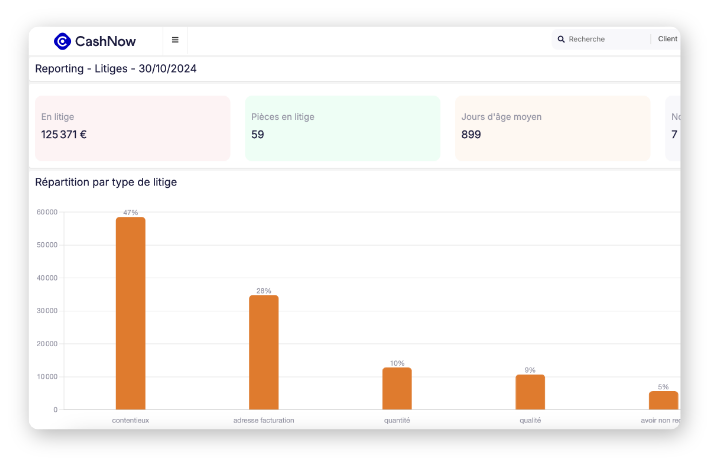
A client can withhold payment without ever explicitly flagging why, dissatisfaction with part of the service, a gap between what was expected and what was delivered, a disagreement over quantity or quality. Rather than formally raising a complaint, many clients simply choose not to pay, hoping the issue resolves itself or goes unnoticed.
A standard follow-up that only restates the due date goes nowhere in this case, the client isn’t responding because the real issue isn’t the payment date, it’s the unspoken disagreement.
Spotting this kind of silence, a client who stops responding to follow-ups after previously paying normally, is often a sign that you should look for a hidden dispute rather than push harder on a standard reminder.
Also worth reading: Payment default risk: how to spot it as early as the quote stage
The client is going through a genuine cash flow crunch
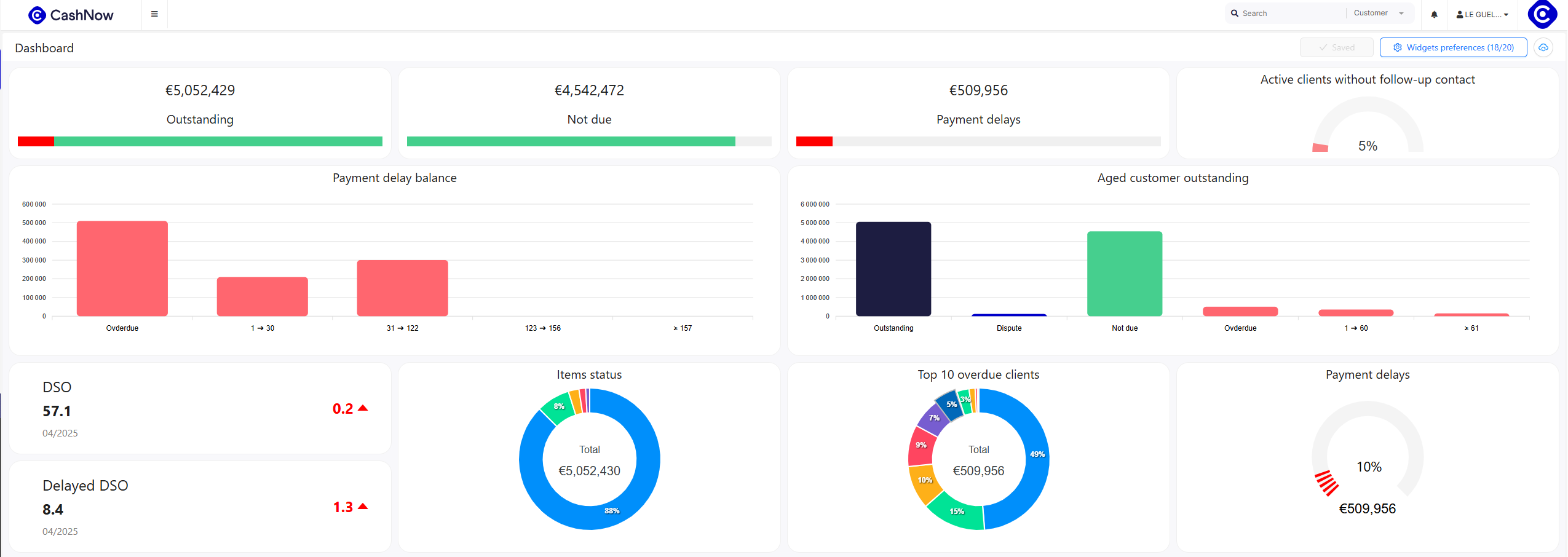
Some clients don’t pay because they can’t, whether temporarily or long-term. A company going through a rough patch prioritizes its payments, strategic suppliers and the most critical deadlines come before the rest.
This scenario deserves the closest attention: a client sliding from a regular payment pattern into increasingly frequent delays is sending a signal that goes beyond the current invoice. It’s a risk signal to track over time, not just an invoice to chase.
Also worth reading: DSO: 5 concrete levers to improve your payment terms
The client’s follow-up process never created real urgency
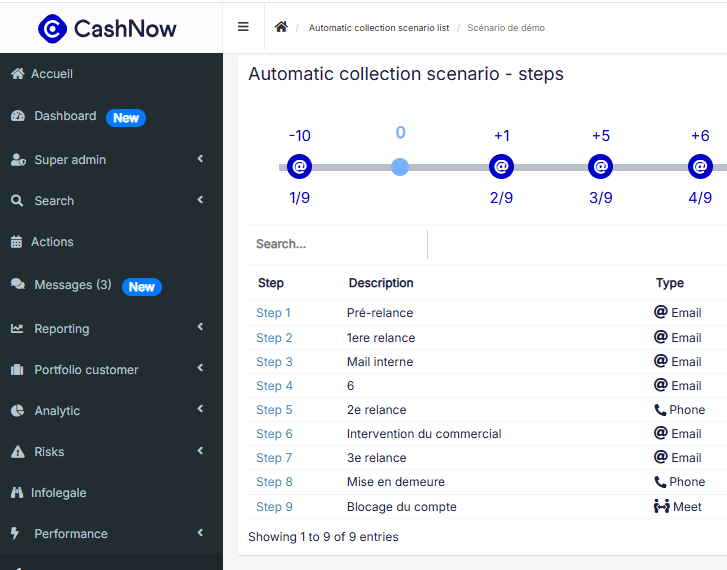
Finally, a significant share of delays simply comes down to the fact that nothing in the client’s follow-up process ever created genuine urgency. A single reminder sent once, with no follow-through and no escalation, carries no more weight than a polite nudge that can be safely ignored.
A client quickly learns how its suppliers behave. If they notice that a late invoice never triggers a serious follow-up, never incurs a penalty, never has any real consequence, they come to understand, consciously or not, that this supplier can be paid last.
What this means concretely for your collections strategy
Applying the same follow-up scenario to every delay means ignoring these five different realities. An invoice lost in an internal process needs to be re-routed to the right contact, not chased with a firm tone. An unspoken disagreement needs to be identified, not buried under a standard reminder. A genuine solvency risk needs closer monitoring, not just a reminder email.
That’s exactly what structured collections make possible: qualifying the nature of the delay before choosing how to respond, instead of applying a single scenario to every situation.
Want to structure your follow-ups based on the real nature of each delay?
Request a demoCashNow, a collections software solution that distinguishes each situation
CashNow is a collections software solution that qualifies the nature of each delay, administrative bottleneck, dispute, solvency risk, and adapts the follow-up accordingly. Automated customer follow-up, dispute management, credit risk monitoring: an approach that adapts to the reality of each situation instead of applying a single scenario.
FAQ – Why don’t clients pay
How can I tell if a client isn’t paying out of forgetfulness or genuine financial difficulty?
The most reliable signal is how payment behavior changes over time. A client who pays normally and then gradually slides into increasingly frequent delays shows a risk signal worth watching. An isolated delay, with no history of decline, is more often linked to forgetfulness or a one-off holdup.
How do I identify a delay that’s actually hiding an unexpressed dispute?
A client who stops responding to follow-ups, after previously paying and communicating normally, is often a sign of an unformalized disagreement. A standard follow-up goes nowhere in this case, you need to actively look for the cause of the silence rather than insist on the due date.
Should all late-paying clients be treated the same way?
No. An invoice stuck in an internal approval process, a simple oversight, a hidden dispute, and a genuine solvency risk all call for different responses. Applying the same follow-up scenario to every situation reduces collections effectiveness and can needlessly strain a business relationship.
Can a firm follow-up make things worse with a client acting in good faith?
Yes, if the delay stems from an administrative bottleneck or a simple oversight, an overly aggressive follow-up can damage the business relationship without speeding up payment. The tone and content of the follow-up should match the actual cause of the delay, not an automatic escalation.
Written by:

Charles Plasse
Co-founder and Managing Partner of CashNow
Charles Plasse is the co-founder and Managing Partner of CashNow, a FinTech company specializing in accounts receivable management and debt collection. Before founding CashNow in 2013, he worked for several years as a Cash & Working Capital consultant for leading firms, including EY, Deloitte, and Eight Advisory, assisting large corporations. Today, he helps SMEs and mid-sized companies optimize their DSO and structure their collection processes.