
Chemical industry debt collection
Manage your B2B receivables with precision.
High volumes, strict deadlines and strategic clients to preserve.
In this context, collections management cannot be handled as a simple tracking of overdue invoices. It requires precise visibility over the outstanding balance, follow-up tailored to each industrial client’s profile, and rigorous dispute management for issues arising over quantities, prices or delivery conditions.
Discover how to structure your collections in the chemical industry, from major industrial accounts to export flows.
The specific challenges of debt collection in the chemical industry
A suitable debt collection software must be able to integrate these contractual conditions to trigger follow-ups at the right moment, without following up too early (at the risk of upsetting a strategic client) or too late (at the risk of letting the outstanding balance deteriorate).
The collections management tool must make it possible to configure differentiated scenarios according to the client profile (major account, export client, distributor) and to adapt the tone and cadence accordingly.
Identifying and qualifying this type of blockage, a missing document rather than a commercial dispute, is essential to direct follow-up to the right contact and unblock the situation without creating unnecessary friction.
Without a global view of all your invoices, both domestic and international, it is difficult to know where your cash flow stands and to forecast incoming payments.
Also worth reading: DSO: 5 concrete levers to improve your payment terms
What CashNow brings to companies in the chemical industry
Collections management adapted to the rules of your major contracts
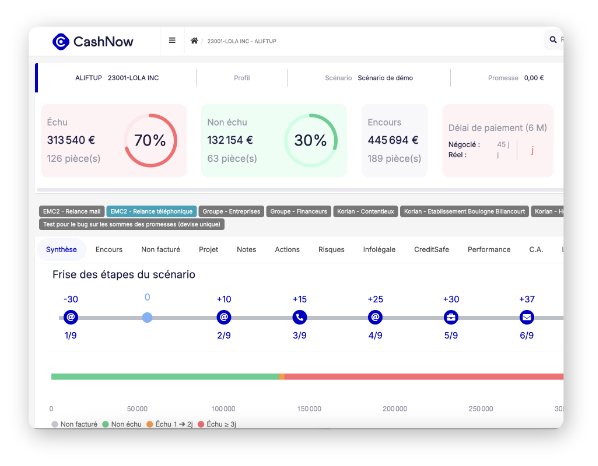
Differentiated follow-up scenarios by client profile
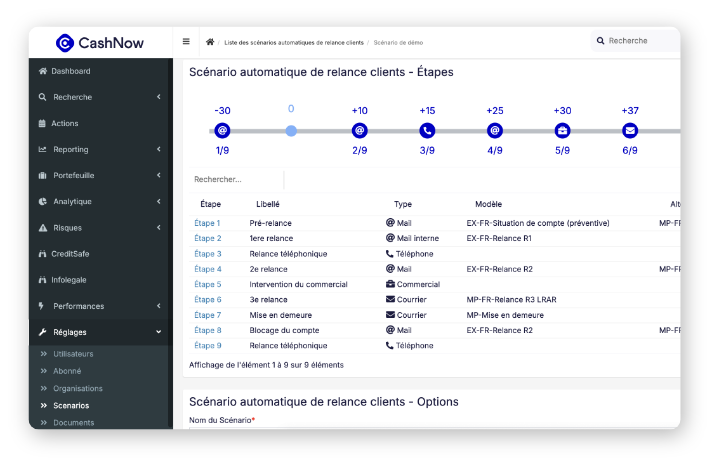
Precise qualification of disputes and documentary blockages
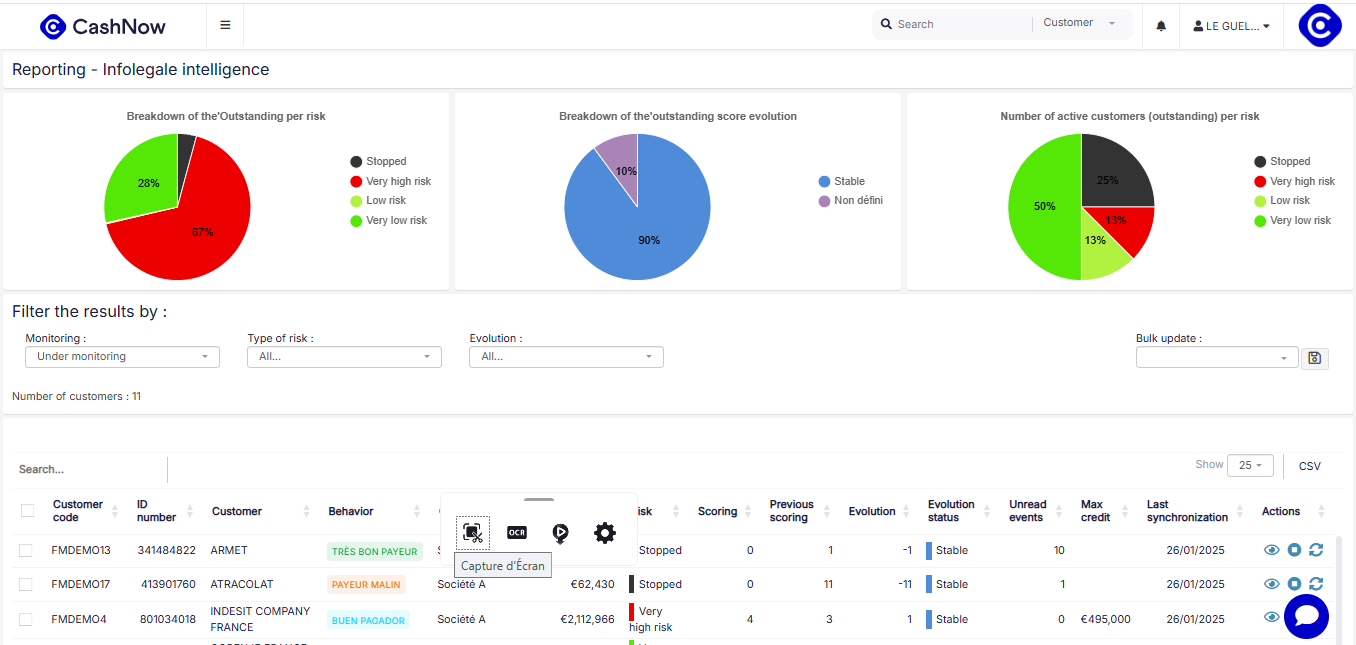
Reporting to understand why a payment is blocked
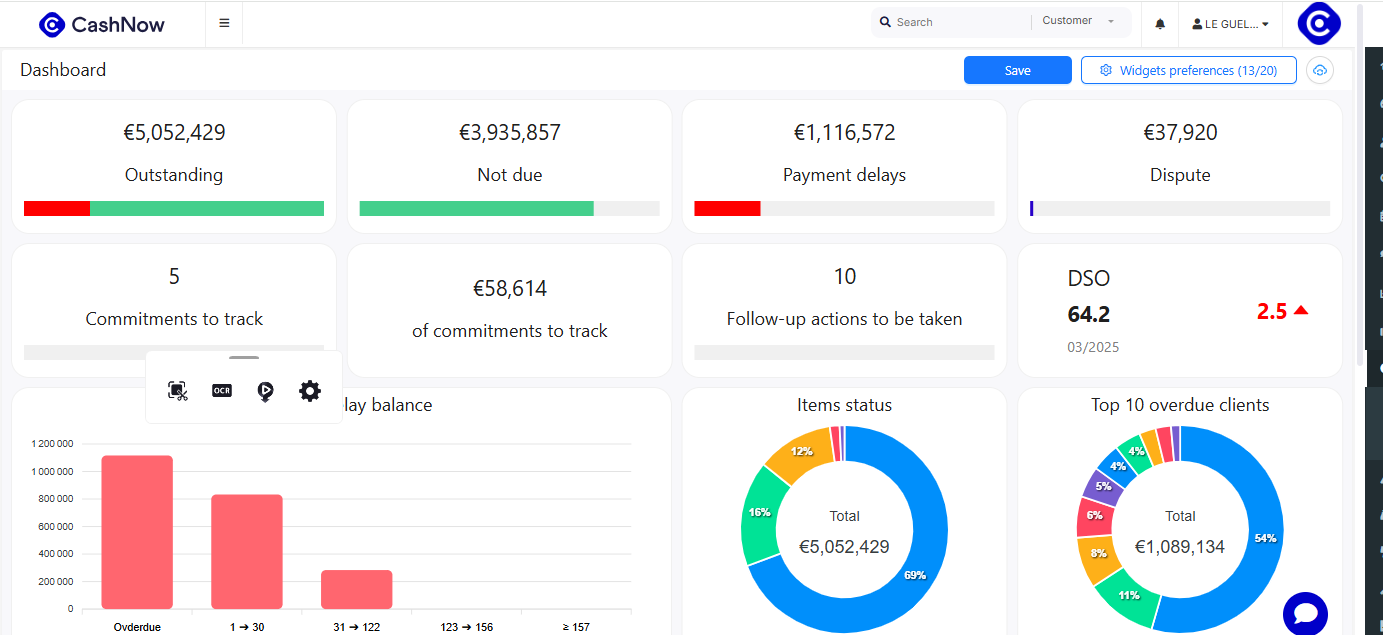
CashNow, a debt collection software for industrial companies
Beyond the chemical sector, CashNow is a debt collection software built for B2B companies managing large outstanding balances and recurring clients: automated follow-up, dispute management, DSO and credit risk management. A SaaS platform that adapts to the complexity of your activity without burdening your teams.
You work with industrial clients that have their own payment rules?
Let’s talk, contact us.
Information request
FAQ: Debt collection in the chemical industry
How do you manage follow-up with a major industrial account without compromising the commercial relationship?
The key is to differentiate the tone and cadence according to the client profile. A recurring major account is not followed up in the same way as a one-off client: the first message can be a simple preventive reminder before the due date, neutral and factual, with progressive escalation reserved for cases where the delay is confirmed. CashNow makes it possible to configure these differentiated scenarios by client segment.
How do you know whether a delay comes from a missing document or a genuine disagreement?
Qualifying the reason for the delay is a key step. If the client does not dispute the invoice but has not yet validated the delivery note or the certificate of analysis, it is a documentary blockage, and follow-up must target the relevant department, not the accounts team. CashNow makes it possible to qualify this type of situation and direct the action accordingly.
How do you track invoices abroad with multiple currencies and different deadlines?
A suitable collections tool must make it possible to centralise the entire outstanding balance, domestic and export, with visibility by client, by market and by currency. Without this consolidation, cash flow management remains fragmented and actual collection delays are difficult to anticipate.
Does CashNow's debt collection software integrate with existing management tools (ERP, accounting)?
CashNow is designed to interface with existing management systems in order to automatically retrieve invoicing and outstanding balance data. Want to know how to integrate it with your current software? Let’s discuss it during a demonstration.